IDX – anti-counterfeit platform with unique product codes

A platform that gives every product its own signed code, verifies it in one scan without an app, and flags copied codes as suspicious. Built on .NET, React and Azure, then delivered and handed over to IDX.

Client
IDX, brand protection technology
Markets
Brands selling in Ukraine
Scope
Backend and web app, delivered and handed over
Services
Architecture, code generation, backend, API, web app development
Platform
.NET · React · Azure

1 code per item

Every product gets its own signed code

No app

Buyers check a product with the phone camera

Copies flagged

A code scanned in several places is marked suspicious

3 parts

Brand dashboard, verification page and API on one backend

Project

Overview

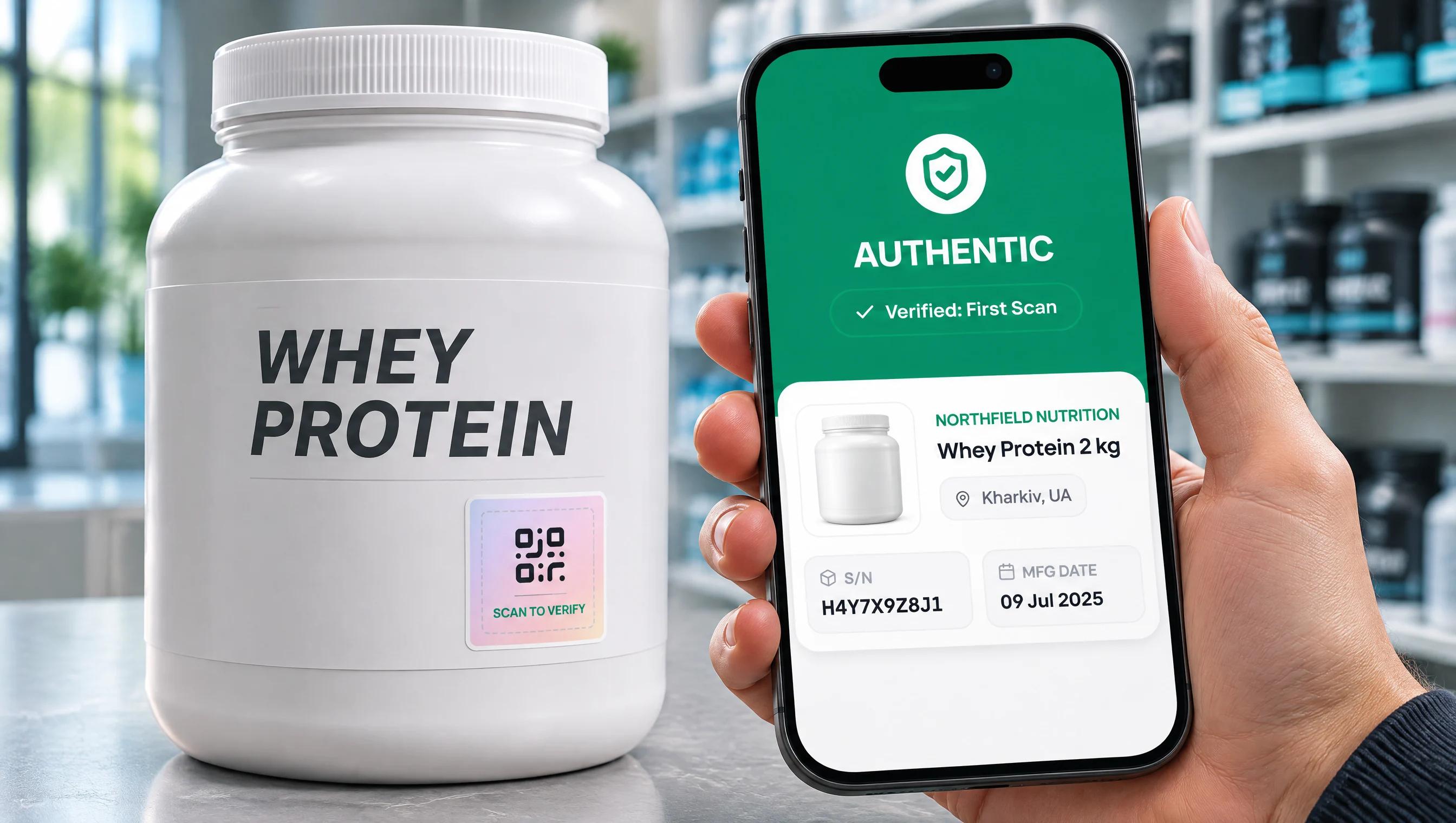
IDX protects brands from counterfeits. Each product carries its own QR code on a sticker. When a buyer scans it, they see straight away whether the item is original, and the brand learns where and when its products are checked.

Sentysoft built the technology behind the service: a .NET backend on Azure, a code generation system that makes every code unique and impossible to guess or forge, a verification page for buyers, a dashboard for brands and an API for brands' own systems. A printed code can still be photocopied, so the platform also watches how each code is scanned and flags copies as suspicious.
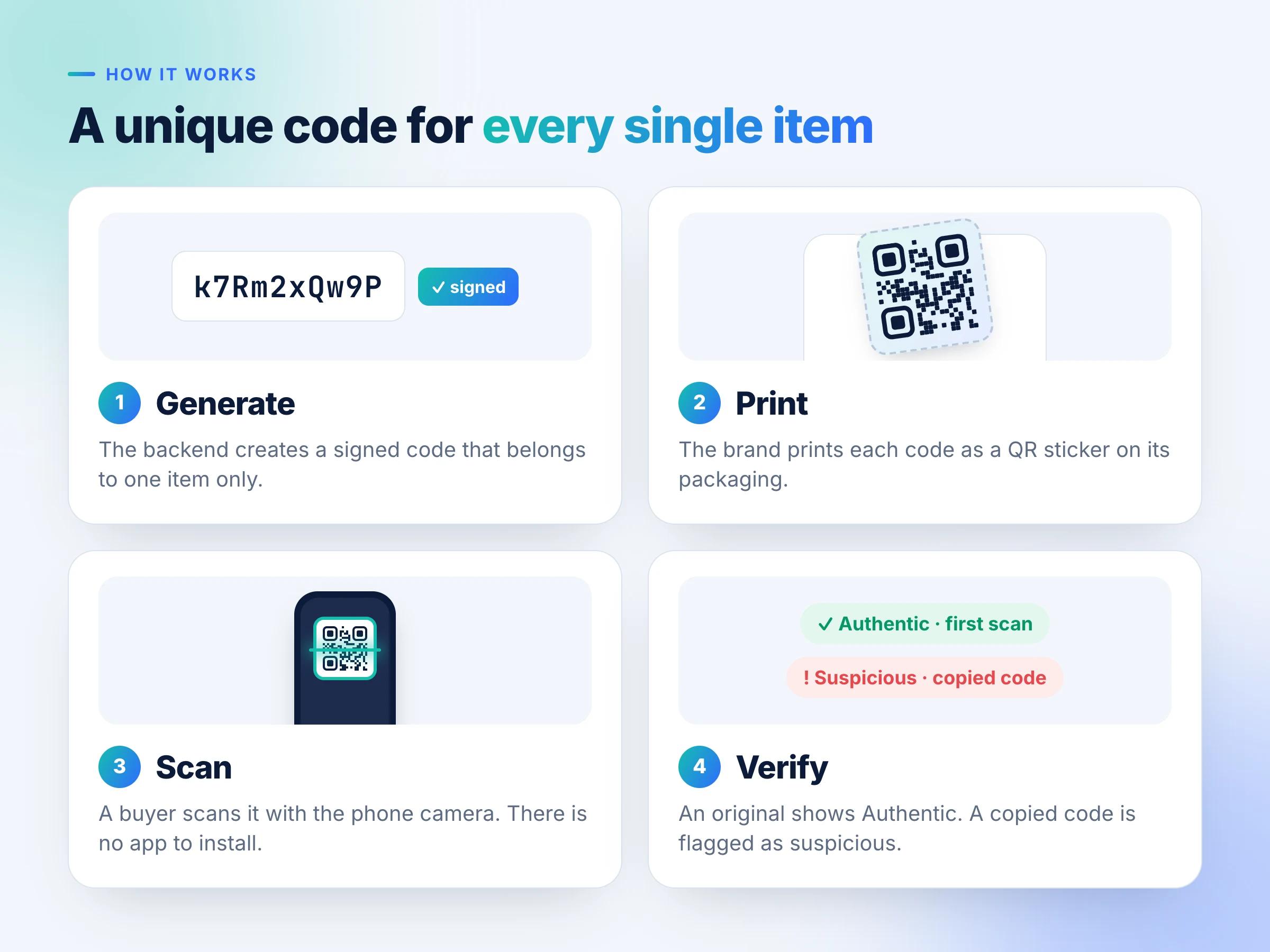
  1. 1A unique code for every item
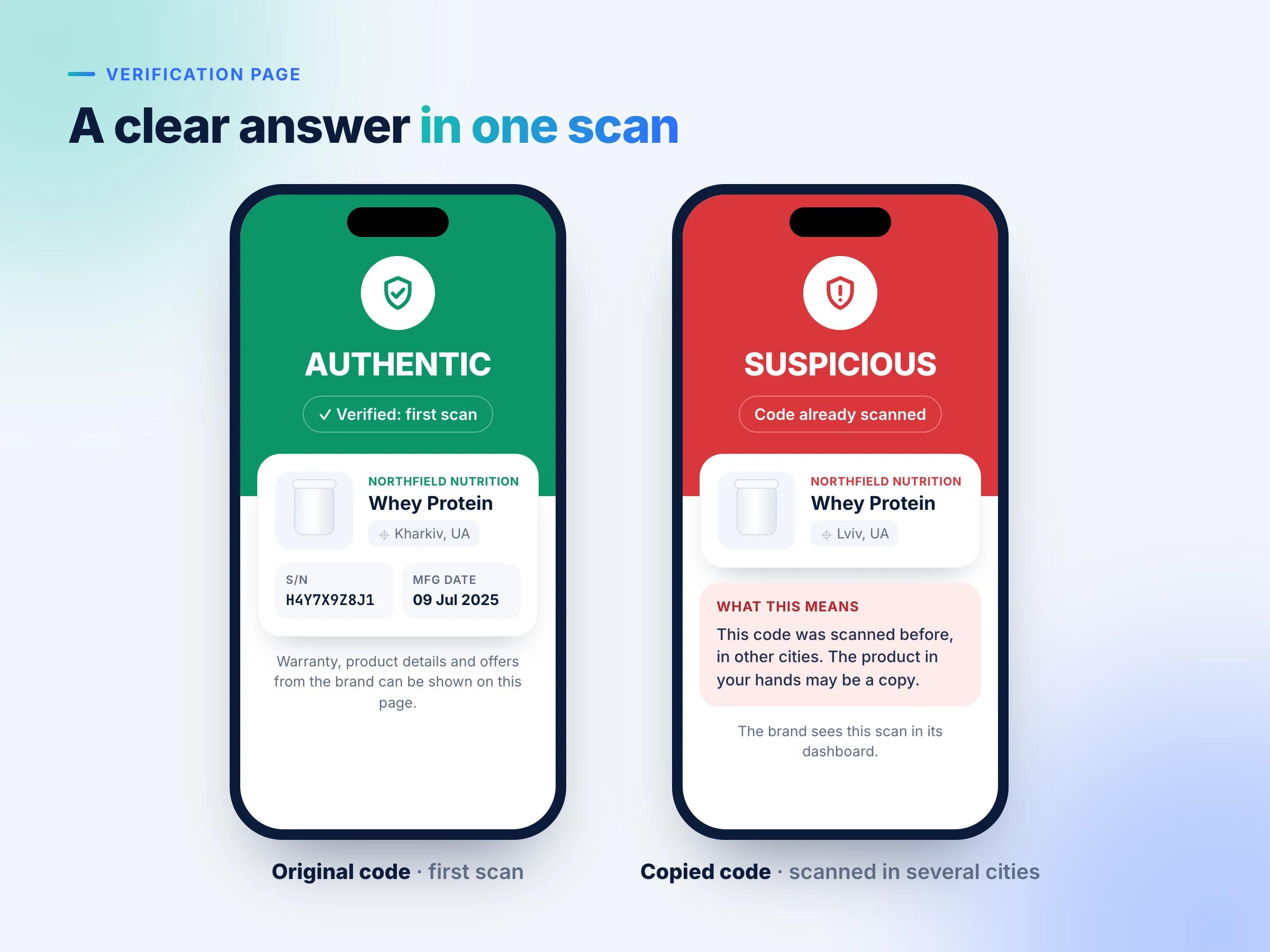
  2. 2Verification in one scan, with no app
  3. 3Catch copied codes automatically
  4. 4Give brands control of their codes and data
What we built

One backend behind every scan

Backend · .NET on Azure

Code engine

Creates the codes

  • A unique, signed code for each item
  • Separate keys for each brand
  • Codes issued in batches for printing

Verification page

For buyers, in the phone browser

  • Authentic or suspicious, in one scan
  • Product, serial number and production date
  • Brand content such as warranty and offers

Brand dashboard

For brand teams

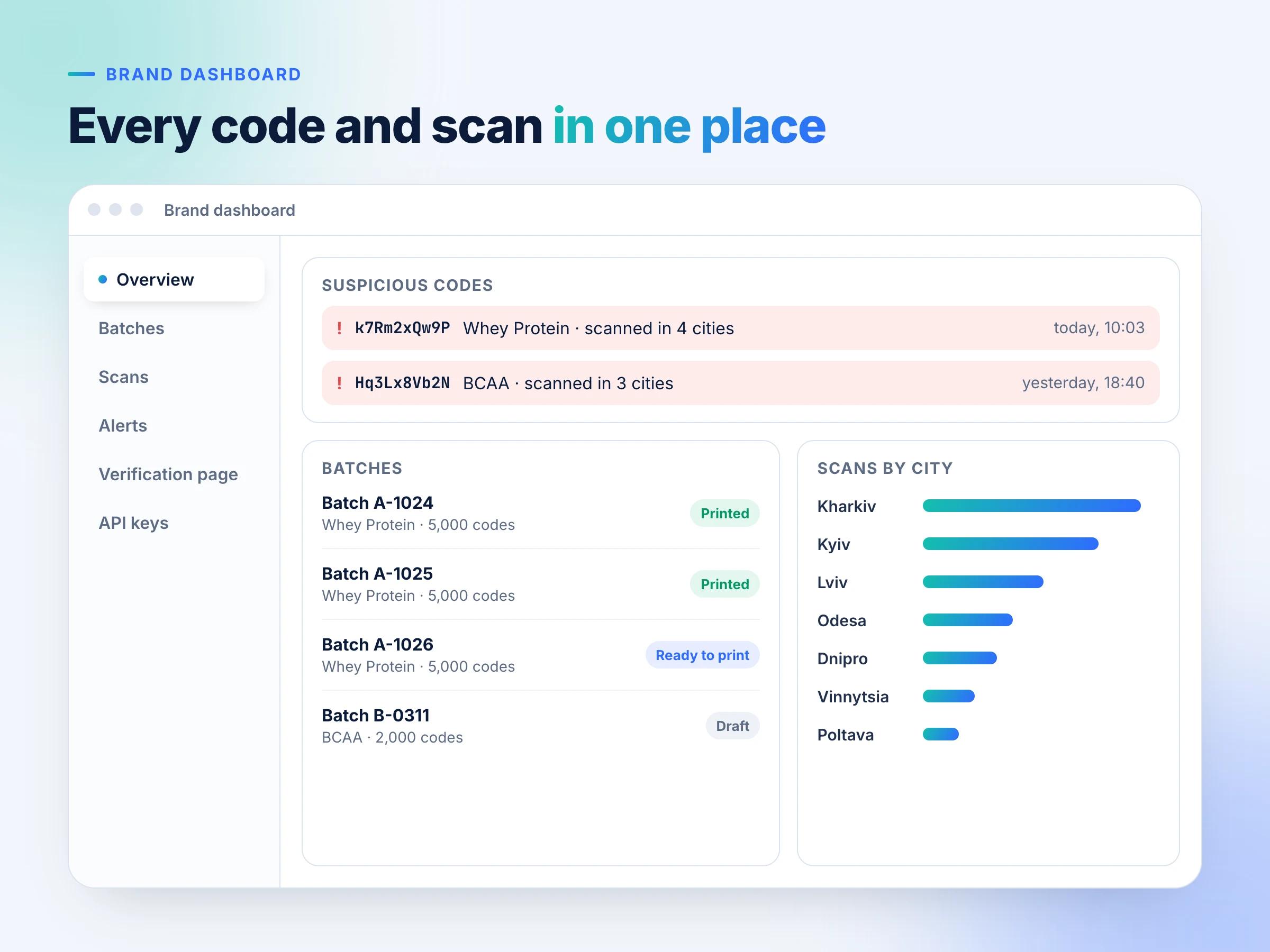
  • Batches of codes
  • Scans by time and place
  • Alerts on suspicious codes
  • Verification page settings

API

For brands' own systems

  • Code checks from the brand's own apps and websites
  • Access with each brand's own API keys

Problems & Solutions

1

Counterfeits look like the real thing, so buyers can't tell them apart

Every item gets its own QR code, and one scan shows whether it is original

2

Serial numbers in a sequence can be guessed, and printed codes can be faked

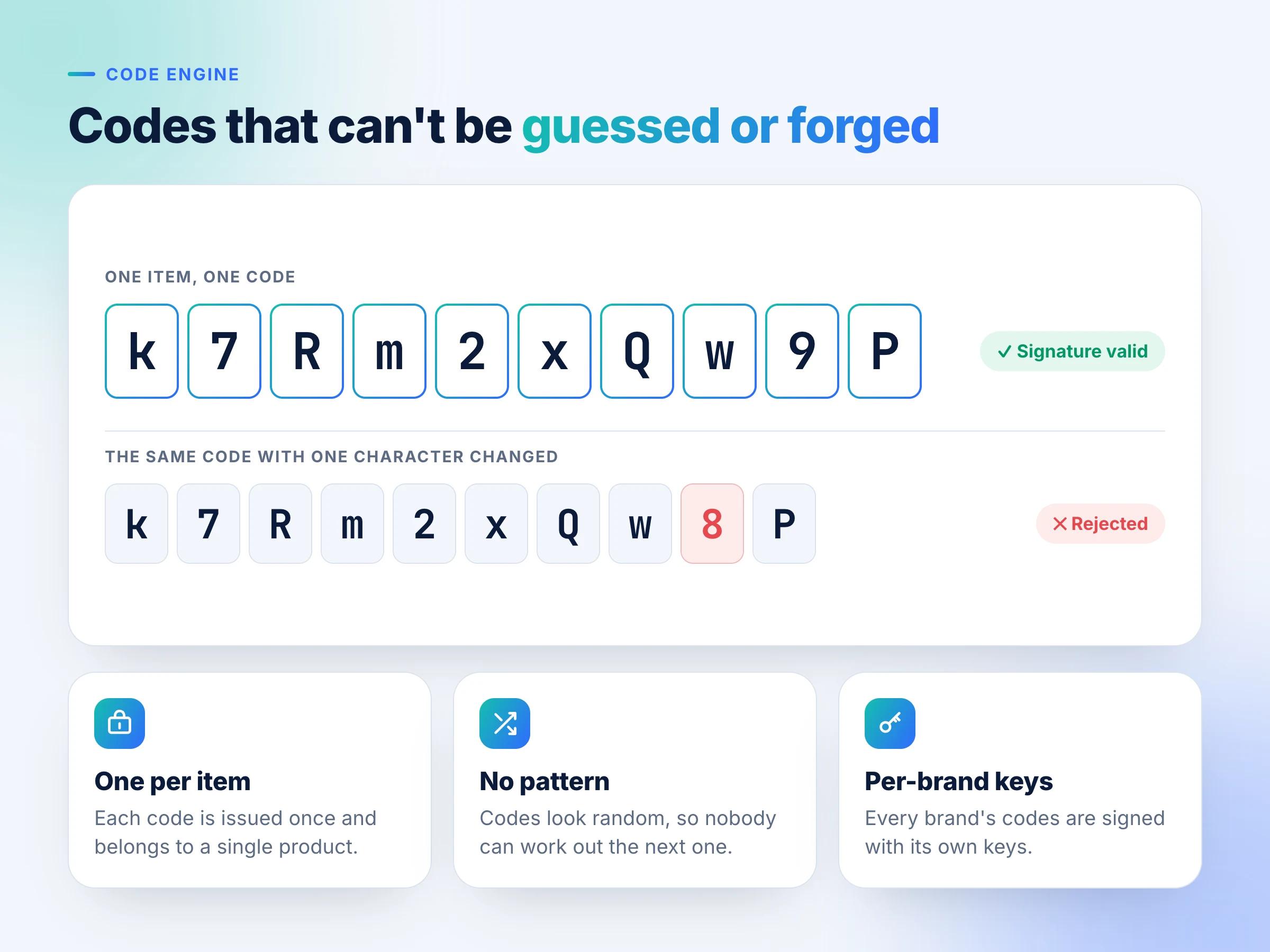
Codes look random and are digitally signed: change one character and the check fails

3

A real code can still be copied onto fake products

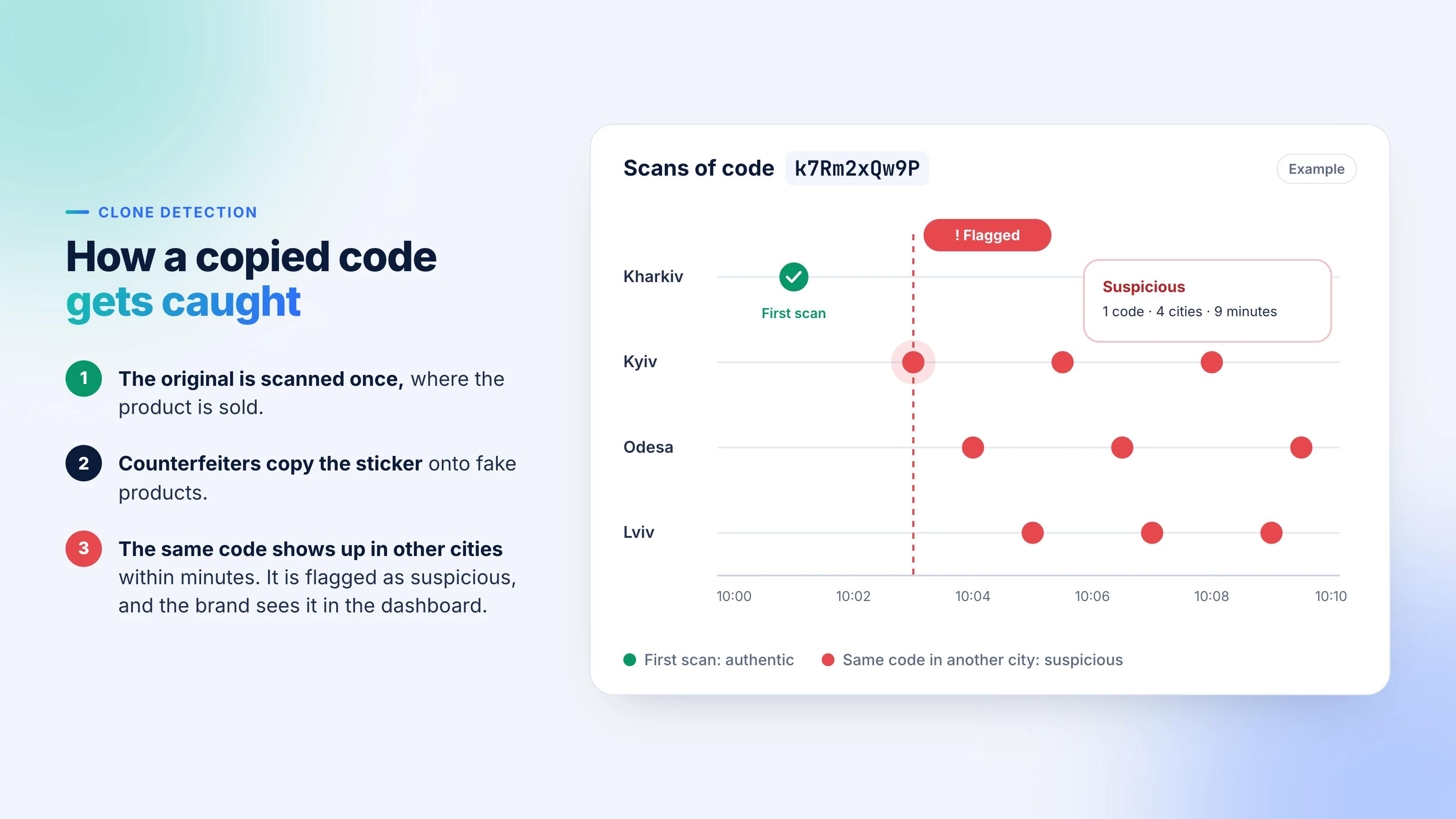
Every scan is logged with its time and place. When the same code shows up in other cities within minutes, it is flagged as suspicious

4

Buyers won't install an app just to check a product

The verification page opens in the phone browser, straight from the camera

5

Brands need to see where their products are checked and spot problems early

A dashboard with batches of codes, scans by city and alerts on suspicious codes

6

Each brand's codes must stay separate and secure

Every brand's codes are signed with its own keys, so one brand's codes can't be made with another's

Diagram: a copied code scanned in four cities within minutes is flagged as suspicious
View

Key Features Developed

Unique codes: The engine issues one code per item, so every product can be checked on its own.

Digital signature: Every code is signed. A code with even one changed character fails the check.

Per-brand keys: Each brand's codes are signed with its own keys and kept apart from other brands.

Batches: Codes are issued in batches, ready to print as QR stickers for a production run.

Verification page: Opens from the phone camera and shows Authentic or Suspicious, with product details and the brand's own content.

Clone detection: Each scan is logged with its time and place, and a code that appears in several cities is flagged.

Brand dashboard: Batches, scans by city and alerts on suspicious codes in one place.

API: Brands check codes from their own apps and websites.

How we worked

From code design to handover

  1. Step 1

    Code design

    How codes are generated, signed and checked, with separate keys for each brand.

  2. Step 2

    Backend and API

    The .NET backend on Azure: the code engine, the scan log, clone detection and the API.

  3. Step 3

    Verification page

    The page buyers see after a scan, built in React for phone browsers.

  4. Step 4

    Brand dashboard

    Batches, scan data, alerts and verification page settings for brand teams.

  5. Step 5

    Handover

    The finished platform delivered and handed over to IDX.

Project

Conclusion

Sentysoft built the technology behind IDX: a code engine that gives every product its own signed code, a verification page that answers in one scan, a dashboard where brands manage their codes and see every scan, and an API for their own systems. A copied code doesn't pass as an original: when it shows up in other cities, it is flagged as suspicious. The platform was delivered and handed over to IDX.

Need a platform with secure codes or tracking?

Tell us about your product, and we'll suggest an architecture and a plan for the first release.

More case studies

Magiczna Kraina – website redesign for a nursery and kindergarten - Sentysoft
View
Sentysoft replaced a nursery and kindergarten's outdated Wix site with a fast, bilingual website that the owner updates herself, in three weeks.
Syngular Nutrition – e-commerce store for a sports nutrition brand - Sentysoft
View
Sentysoft built and launched a Shopify store from scratch for Syngular Nutrition, a US brand of sports supplements, apparel and accessories.
Contact us

Tell us about your project

Send a few lines about your business and what you need. Vlad, our founder, reads every request and replies within one business day with the next steps.

Vlad Aleksandrov, Founder & CEO

Vlad Aleksandrov

Founder & CEO

We use your details only to reply to your request. See our Privacy Policy.

Vlad Aleksandrov, Founder & CEO

Vlad Aleksandrov

Founder & CEO